
Foreign investors continue to explore Panama because of its strategic location, internationally connected economy, use of the U.S. dollar, established banking and corporate services, and access to markets throughout the Americas. However, choosing to invest in Panama requires more than identifying an attractive property or business opportunity. Investors should understand the legal structure, ownership records, taxes, licensing requirements and risks associated with each investment.
Panama offers opportunities in real estate, logistics, agriculture, tourism, financial services and other commercial sectors. Some investments may also support an application for permanent residence. Nevertheless, investment performance is never guaranteed, and each opportunity requires independent legal, financial and technical due diligence.
Why Invest in Panama?
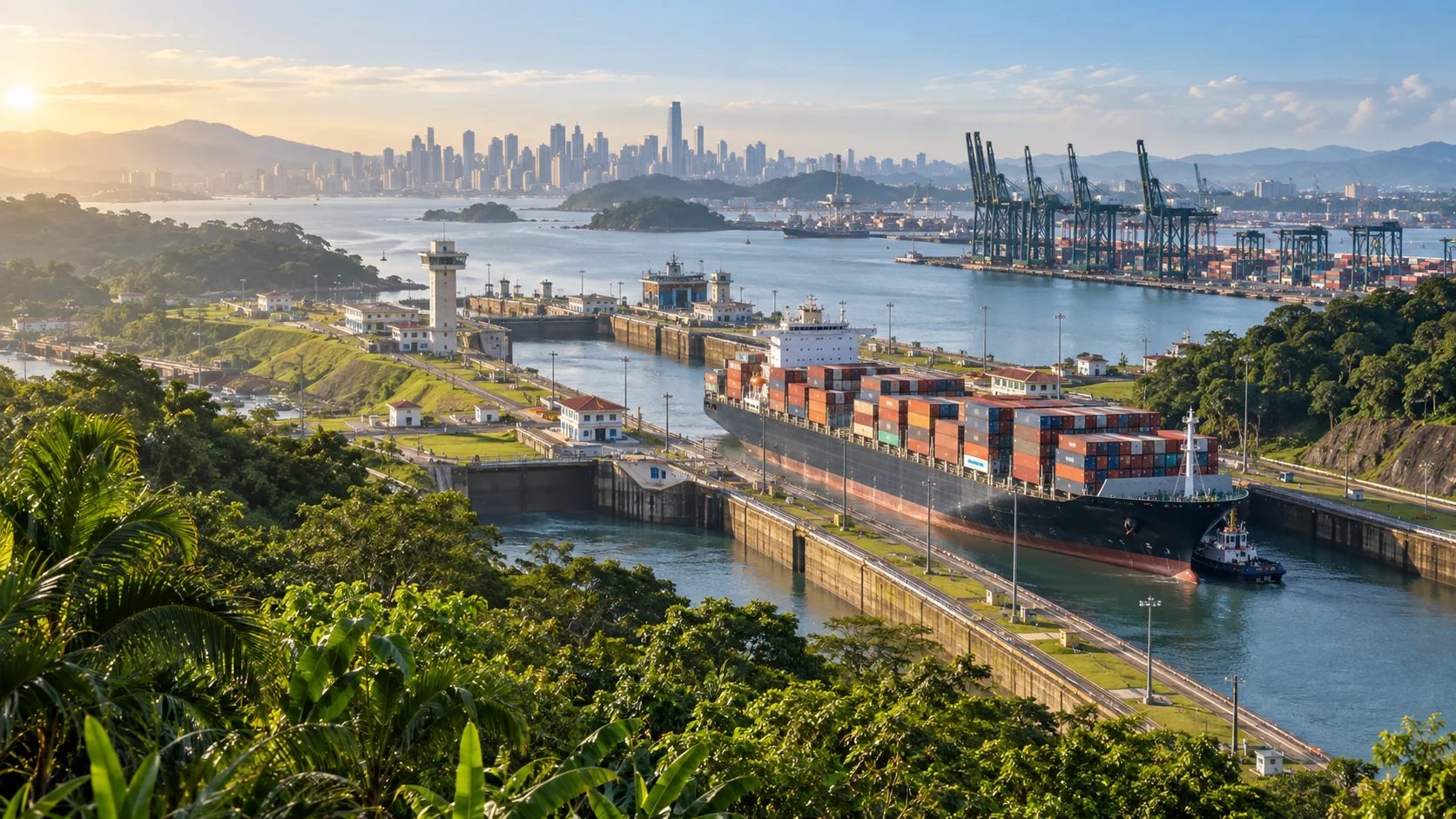
Panama occupies a strategic position between North and South America and connects the Atlantic and Pacific oceans through the Panama Canal. Its ports, international airport, logistics facilities and telecommunications infrastructure support regional commerce and international operations.
According to PROPANAMA, the country promotes its connectivity by air, sea and land as one of its principal advantages for international businesses. Panama also uses the U.S. dollar alongside the balboa, which helps foreign investors avoid the currency conversion issues found in some other regional markets.
Other factors that attract investors include:
- A strategic location for regional operations and distribution.
- Access to ports on both the Atlantic and Pacific coasts.
- An established banking, legal and corporate-services sector.
- Opportunities in real estate, tourism, agriculture and logistics.
- Special commercial regimes for qualifying businesses and multinational companies.
- Residency options connected to certain qualifying investments.
These advantages do not eliminate commercial or legal risk. Investors should evaluate each project individually rather than relying only on Panama’s overall economic position.
Where to Invest in Panama: Key Opportunities
The appropriate investment depends on the investor’s objectives, available capital, expected holding period and tolerance for risk. Some investors seek income or capital appreciation. Others want to operate a business, diversify internationally or combine an investment with a residency strategy.
Real Estate Investment in Panama
Real estate is one of the most visible ways to invest in Panama. Opportunities range from residential apartments and houses to commercial properties, land, tourism projects and income-producing rentals.
Panama City, beach communities, mountain areas and developing regional markets can have very different prices, rental demand and resale conditions. Investors should not assume that a property will produce income simply because it is located in a popular area.
Before purchasing real estate, a lawyer should review:
- The registered owner and complete title history.
- Mortgages, liens, restrictions and other encumbrances.
- Cadastral information, boundaries and surveys.
- Property taxes and any outstanding obligations.
- Zoning and permitted use of the property.
- Condominium regulations and unpaid maintenance fees.
- Construction permits and occupancy documentation, when applicable.
- The terms of any promise-to-purchase or purchase agreement.
Buyers should also account for closing costs, legal fees, maintenance, insurance, repairs, vacancy periods and property-management expenses. Our Panama real estate guide provides additional information for people comparing ownership with renting.
Agricultural Investment
Panama’s climate and varied geography support agricultural activities that include coffee, cacao, tropical fruit, livestock, forestry and other products. Agricultural land can offer long-term potential, but it also involves operational and environmental risks that differ significantly from urban real estate.
Investors should verify road access, water rights, soil conditions, permitted land use, labor requirements, environmental restrictions and the availability of reliable buyers or distribution channels. A low purchase price does not necessarily mean that land can be developed or operated profitably.
Anyone considering farmland should review our detailed guide to Panama agricultural investment.
Businesses and Corporate Investment
Foreigners may establish or acquire businesses in Panama, subject to the rules that apply to the activity involved. Common opportunities include professional services, technology, hospitality, food and beverage operations, logistics, e-commerce and regional support services.
A Panama corporation can provide an organized legal structure for business operations or holding certain assets. However, incorporating a company does not automatically authorize it to conduct every type of business. Municipal permits, tax registration, commercial notices, sector-specific licenses and labor compliance may be required.
Certain occupations and retail activities may also be reserved or restricted under Panamanian law. Foreign investors should therefore confirm that their intended activity and ownership structure are legally permitted before contributing capital or signing commercial agreements.
Learn more about forming and maintaining a Panama corporation.
Logistics and Regional Operations
Panama’s ports, canal, airport connectivity, free zones and road network have encouraged the development of logistics, warehousing, distribution and regional-service businesses. The country also offers special regimes for qualifying operations, including certain multinational headquarters and manufacturing-related services.
Eligibility for a special regime depends on the company, its proposed activities and compliance with the applicable law. Tax, labor and immigration benefits should never be assumed without confirming that the business qualifies and receives the required authorization.
Investors can review current investment-promotion programs through PROPANAMA, the Panamanian authority responsible for promoting investment and exports.
Securities and Financial Investments
Investors may also consider securities offered through Panama’s regulated capital market. These can include shares, bonds and other financial instruments, depending on the products available through properly licensed market participants.
Before investing, confirm that the brokerage firm, investment adviser or other intermediary is authorized by Panama’s Superintendency of the Securities Market. Investors should review the issuer, offering documents, fees, liquidity, custody arrangements and risk disclosures.
The existence of a company or intermediary in Panama does not, by itself, mean that an investment product is licensed, guaranteed or appropriate for a particular investor.
Investing in Panama and Permanent Residence
A qualifying investment may also provide a route to permanent residence through Panama’s Qualified Investor immigration program. This program is separate from the ordinary purchase or operation of an investment. Meeting a commercial objective does not automatically satisfy immigration requirements.
Qualifying categories may include:
- A minimum $300,000 real estate investment.
- A minimum $500,000 investment in securities through an authorized Panamanian securities firm.
- A minimum $750,000 time deposit with a Panamanian bank holding a general banking license.
The qualifying investment generally must be maintained for at least five years. Applicants must also document the foreign origin of the invested funds and comply with the legal and immigration requirements applicable to their selected category.
Because the documentation and structure of the transaction can determine whether an investment qualifies, investors seeking residence should obtain advice before transferring funds or completing a purchase. Review our updated guide to the Panama Qualified Investor Visa for detailed requirements.
Can Foreigners Own Property and Companies in Panama?
Foreigners can generally own titled property and shares in Panamanian companies. However, constitutional and statutory restrictions may apply to certain land, regulated activities and professions.
For example, special attention is required when considering property near national borders, islands, waterfront areas, concession property or land that does not have a registered title. Rights of possession are not equivalent to registered ownership and can involve substantially different risks.
A corporation or private interest foundation may sometimes be used to hold an investment. The appropriate structure depends on the investor’s objectives, tax position, succession plan, financing arrangements and reporting obligations in Panama and abroad.
Taxes When You Invest in Panama
Panama generally applies a territorial approach to income taxation. In broad terms, income produced from activities carried out in Panama or property located in Panama may be taxable in Panama. Determining the source and tax treatment of income can be complex, particularly when a business has customers, management, services or transactions in more than one country.
Investors should not interpret Panama’s territorial system as meaning that every investment or company is automatically tax-free. Depending on the activity and structure, obligations may include income tax, capital gains tax, property tax, transfer tax, dividend tax, municipal taxes, withholding, payroll obligations and ITBMS.
Foreign investors may also have tax and reporting obligations in their home country. U.S. citizens and other U.S. persons, for example, remain subject to U.S. tax and financial-reporting rules even when they live or invest abroad. See our Important Notice to U.S. Persons.
Due Diligence Before You Invest in Panama
Thorough due diligence is essential before acquiring property, purchasing a business, forming a partnership or transferring investment funds.
A proper review may include:
- Identity and authority: Verify the seller, company representatives and beneficial owners.
- Ownership: Confirm that the seller legally owns the asset or has authority to transfer it.
- Corporate records: Review the company’s registration, directors, resident agent and good-standing status.
- Liabilities: Identify mortgages, lawsuits, tax debts, employee claims and contractual obligations.
- Licensing: Confirm that the business has the permits required for its operations.
- Financial information: Independently review revenue, expenses, debts and material contracts.
- Physical inspection: Evaluate the property, equipment, infrastructure and environmental conditions.
- Transaction documents: Use written agreements that clearly define price, conditions, representations and remedies.
- Source of funds: Preserve bank records and other evidence documenting the origin and transfer of the investment capital.
Whenever possible, funds should be transferred through traceable banking channels. Cash transactions, informal ownership arrangements and pressure to complete a deal without independent review are important warning signs.
Common Risks When Investing in Panama
Every investment carries risk. Some problems can be reduced through legal and financial review, but no professional can guarantee the future performance of an investment.
Common risks include:
- Purchasing property with title, boundary or access problems.
- Relying on projected rental income that has not been independently verified.
- Entering a development before reviewing permits and financing.
- Buying shares in a company without understanding its liabilities.
- Using an unlicensed broker or investment promoter.
- Assuming that a tax incentive applies without confirming eligibility.
- Failing to account for maintenance, management and operating costs.
- Depending on verbal promises that do not appear in the written agreement.
- Confusing an investment opportunity with guaranteed immigration approval.
Investors should be cautious of guaranteed returns, unusually high yields, artificial urgency and requests to send funds to unrelated third parties.
How to Invest in Panama Safely
A careful investment process usually begins by defining the objective. An investor seeking rental income may require a different structure from someone opening an operating business or applying for permanent residence.
Before committing funds:
- Define the investment objective and expected holding period.
- Select the type of asset or business.
- Determine whether the investment will be held personally or through a legal entity.
- Obtain independent legal, tax and financial advice.
- Complete due diligence before signing an unconditional agreement.
- Use written contracts and traceable payment methods.
- Complete all registrations, permits and post-closing obligations.
When residence is also an objective, the investment and immigration planning should be coordinated from the beginning. A transaction that is commercially valid may still fail to satisfy the documentation required for an immigration application.
Frequently Asked Questions About Investing in Panama
Is Panama a good country for foreign investment?
Panama offers strategic connectivity, use of the U.S. dollar, established business services and opportunities in several sectors. Whether it is suitable for a particular investor depends on the investment, price, structure, risks and the investor’s objectives.
Can a foreigner buy real estate in Panama?
Foreigners can generally purchase titled real estate in Panama. However, restrictions and additional risks can apply to certain locations and forms of landholding. A title investigation should be completed before purchasing.
Can investing in Panama provide permanent residence?
Yes. Certain qualifying investments may support an application under Panama’s Qualified Investor program. The investment must meet the applicable minimum, documentation and holding-period requirements.
Do I need a Panama corporation to invest?
Not always. Some investments can be held personally, while others may benefit from a corporate structure. The correct choice depends on liability, succession, financing, taxation and regulatory requirements.
Are investments in Panama tax-free?
No. Panama’s territorial tax system does not make every investment tax-free. The applicable taxes depend on the source of income, asset, transaction and legal structure.
Should I complete due diligence before signing a contract?
Yes. Ideally, the contract should make the transaction conditional upon satisfactory legal, financial and technical due diligence. Investors should not rely exclusively on information provided by the seller or promoter.
Legal Assistance for Investing in Panama
International Relocation Firm assists foreign clients with Panama investment structures, real estate transactions, corporate formation, due diligence and residency planning. The appropriate process depends on the type of investment and the client’s legal and commercial objectives.
Contact us before completing an investment or transferring funds so that the proposed transaction can be reviewed and properly structured.
This article provides general information and does not constitute legal, tax, financial or investment advice. Investment values can rise or fall, and eligibility for permits, incentives or residence depends on the applicable law and the facts of each case.
Updated September 2026.