
Panama agricultural investment offers opportunities across farmland, commercial farming, specialty crops, livestock, agro-processing, and agricultural infrastructure. Panama’s tropical climate, access to international shipping routes, and use of the U.S. dollar make the country attractive to investors interested in agriculture and food production.
However, purchasing farmland or financing an agricultural project requires more than identifying fertile land. Investors must evaluate property title, water availability, soil conditions, environmental restrictions, operating costs, transportation, labor, and the commercial market for the intended crop.
This guide explains the principal ways of investing in Panama agriculture, the products and regions investors commonly evaluate, and the legal and practical due diligence that should take place before committing capital.
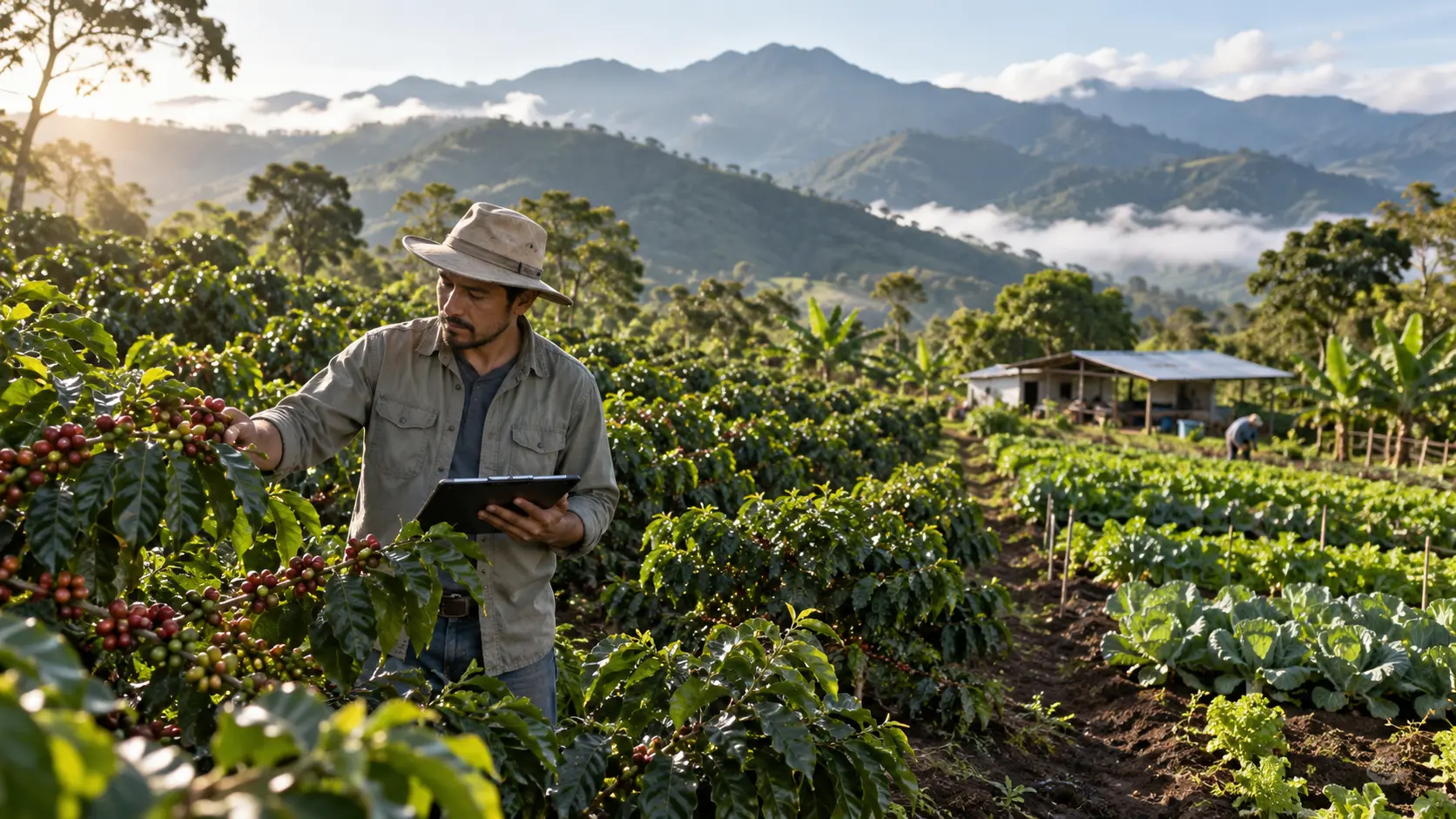
Table of Contents
Overview of Agriculture in Panama
Panama produces food for its domestic market while also exporting selected agricultural products. The sector includes family farms, cattle ranches, plantations, specialty coffee operations, fruit producers, agricultural cooperatives, packing facilities, and larger agro-industrial businesses.
The country’s geography creates different agricultural environments within a relatively small territory. Elevation, rainfall, soil composition, drainage, access to water, and proximity to roads can vary considerably. Therefore, a crop that performs well in one part of Panama may not be commercially viable in another.
Investors should evaluate each property and project individually. A favorable climate at the national level does not replace a professional agronomic study, soil analysis, water assessment, or detailed financial model.
Agricultural Regions in Panama
Different areas of Panama have developed around particular crops and farming activities. Some of the regions commonly considered by agricultural investors include:
Chiriquí Province
Chiriquí is one of Panama’s most important agricultural provinces. Its highlands, including areas around Boquete, Volcán, Cerro Punta, and Renacimiento, support coffee, vegetables, dairy production, flowers, and other highland crops. Lower elevations also support cattle, rice, plantains, and tropical fruit.
Land prices, access, rainfall, and temperatures can differ substantially between the highlands and the warmer areas of the province.
Azuero Peninsula
The provinces of Herrera and Los Santos have a long history of cattle ranching and the production of crops such as corn, rice, sugarcane, and other agricultural products. Water supply and seasonal drought conditions are especially important considerations when evaluating land in this region.
Central Panama
Areas of Coclé, Veraguas, and Panamá Oeste may offer opportunities involving fruit, livestock, rice, poultry, and mixed agricultural operations. Their proximity to major population centers can help with distribution, although the condition of local roads and the distance from the farm to processing or storage facilities must still be evaluated.
Caribbean and Eastern Regions
Some areas of Bocas del Toro, Colón, and Darién support bananas, plantains, cacao, coconut, and other tropical products. Projects in these regions can involve additional logistical, environmental, access, and land-tenure considerations. Enhanced legal and technical due diligence may therefore be necessary.
Principal Crops and Agricultural Products
Investors exploring farming in Panama may encounter opportunities involving:
- Coffee: Panama is internationally recognized for specialty coffee, particularly varieties produced in the Chiriquí highlands. Elevation, microclimate, processing, quality control, and access to specialty buyers are critical.
- Cacao: Cacao may provide opportunities for cultivation, fermentation, processing, and specialty chocolate production. Investors should evaluate rainfall, plant disease, post-harvest infrastructure, and buyer relationships.
- Bananas and plantains: These crops have an established history in tropical areas but require careful management of disease, drainage, transportation, and market access.
- Tropical fruit: Pineapple, mango, papaya, citrus, coconut, and other fruits may serve domestic or export markets. Commercial viability depends on quality standards, packing, refrigeration, transportation, and confirmed buyers.
- Rice and corn: These products form part of Panama’s domestic food market. Investors should examine production costs, mechanization requirements, weather exposure, and market conditions.
- Vegetables: Highland regions produce vegetables for hotels, restaurants, supermarkets, wholesalers, and other domestic buyers.
- Livestock and dairy: Cattle ranching and dairy production are established activities, but pasture quality, water, animal health, processing access, and operational management affect profitability.
No agricultural product produces guaranteed returns. Crop selection should follow a study of the land, climate, operating requirements, market demand, and the investor’s capacity to manage the business.
Panama Agricultural Investment Opportunities
A Panama agricultural investment can take several forms. The appropriate model depends on the investor’s experience, available capital, desired level of participation, and tolerance for operational risk.
Purchasing or Leasing Farmland
An investor may purchase titled agricultural land or lease a farm from its owner. Buying can provide long-term control of the property, while leasing may reduce the initial capital requirement and allow the investor to test an agricultural project before acquiring land.
The terms of a lease should clearly address its duration, improvements, water use, permitted activities, renewal rights, crop ownership, maintenance obligations, and what happens to infrastructure at the end of the agreement.
Acquiring an Operating Farm
Purchasing an established agricultural business may provide existing crops, employees, equipment, permits, suppliers, and customers. Nevertheless, the investor must verify production records, expenses, debts, labor obligations, equipment condition, contracts, and the legal status of the land.
Joint Ventures and Contract Farming
An investor may provide capital, equipment, land, or market access while an experienced producer manages agricultural operations. These arrangements require carefully drafted contracts defining ownership, management authority, reporting, expenses, profit distribution, losses, and exit rights.
Agro-Processing and the Agricultural Supply Chain
Agricultural investment is not limited to owning a farm. Opportunities can also involve:
- Food processing and packaging;
- Cold-storage facilities;
- Warehousing and distribution;
- Irrigation and agricultural technology;
- Nurseries and seed production;
- Equipment rental and maintenance;
- Export preparation and logistics; and
- Value-added products such as roasted coffee, chocolate, fruit preserves, or packaged foods.
These activities can reduce exposure to the performance of a single crop, but they may require additional operating, commercial, sanitary, and environmental permits.
Can Foreigners Own Farmland in Panama?
Foreign investors can generally acquire titled real estate in Panama. However, constitutional rules and special restrictions can affect certain properties, particularly land near national borders, islands, coastal areas, protected zones, indigenous territories, and properties held through concessions or possessory rights.
For this reason, an investor should never assume that every rural property can be purchased or developed in the same manner. The legal status of the specific parcel must be verified before paying a nonrefundable deposit or signing a binding purchase agreement.
A title search should confirm the registered owner, property boundaries, mortgages, liens, easements, limitations, and other recorded encumbrances. Rural properties should also be compared with their cadastral plans and physically surveyed when necessary.
Investors interested in other forms of real estate can review our general guide to Panama real estate.
Due Diligence Before Buying Farmland in Panama
A low asking price or attractive landscape does not necessarily make a property suitable for commercial agriculture. A comprehensive review should cover the land, the proposed business, and the seller.
Property Title and Ownership
- Obtain a current Public Registry certification.
- Confirm that the seller is the registered owner or legally authorized representative.
- Identify mortgages, liens, attachments, restrictions, easements, and pending disputes.
- Verify that the titled surface area agrees with the cadastral plan and physical occupation.
- Investigate whether neighboring owners, tenants, workers, or third parties claim rights over the property.
Titled Property Versus Possessory Rights
Some rural properties are marketed based on possessory rights rather than a registered property title. Possessory rights are not equivalent to titled ownership and may involve additional uncertainty, administrative procedures, competing claims, or restrictions on financing and resale.
An attorney should determine the property’s precise legal status and explain the consequences before the investor enters the transaction.
Survey, Boundaries, and Legal Access
The investor should confirm the property’s boundaries, access points, neighboring parcels, and any existing encroachments. Physical access across another person’s land does not automatically establish a registered right of way.
If the property depends on an access road or easement, that right should be verified in the Public Registry and compared with the conditions on the ground.
Agronomic and Operational Review
- Test soil composition, fertility, acidity, and contamination risk.
- Evaluate rainfall, drainage, slope, erosion, flooding, and drought exposure.
- Confirm whether the intended crop is appropriate for the elevation and microclimate.
- Inspect existing trees, crops, livestock, irrigation systems, buildings, and equipment.
- Review pest, disease, fertilizer, and pesticide management requirements.
- Calculate labor, electricity, fuel, transportation, storage, and maintenance costs.
- Identify potential buyers before relying on projected selling prices.
The Ministry of Environment’s soil information resources may provide useful background, but project-specific testing should be performed by qualified professionals.
Water and Environmental Considerations
Reliable water access is one of the most important elements of an agricultural project. The presence of a river, stream, spring, or well on or near the property does not necessarily mean the investor has an unrestricted legal right to use that water.
Due diligence should examine the water source, seasonal supply, existing concessions or permits, irrigation requirements, pumping costs, watershed conditions, and the rights of neighboring users. Information about Panama’s watersheds is available through the Ministry of Environment.
Depending on the location and proposed activity, an agricultural or agro-industrial project may require environmental review, an environmental impact study, water authorization, forest-clearing approval, wastewater controls, or other permits.
Before clearing land, constructing roads, changing drainage, developing near waterways, or installing processing facilities, investors should determine which approvals apply. Panama’s environmental assessment rules and procedures are administered by the Ministry of Environment.
Investment and Corporate Structures
Farmland or an agricultural business may be acquired personally or through a legal entity, depending on the project. A Panama corporation may provide a structured method for holding assets, entering contracts, hiring employees, receiving investment, and organizing business operations.
However, forming a company does not eliminate legal, tax, accounting, environmental, or beneficial-ownership obligations. The structure should be selected after considering:
- Who will own and manage the investment;
- Whether the transaction involves the property, the operating business, or shares of an existing company;
- Financing and investor contributions;
- Profit distributions and reinvestment;
- Liability and insurance;
- Succession and estate planning;
- Tax and accounting treatment; and
- The investor’s eventual exit strategy.
When acquiring shares of a company that already owns a farm, the buyer must also investigate the company’s debts, tax filings, contracts, employees, litigation, permits, and other liabilities. Purchasing the company is not the same as purchasing only the land.
Government Agencies and Permits
The agencies involved will depend on the property and type of agricultural activity. They may include:
- Ministry of Agricultural Development (MIDA): agricultural programs, technical matters, and activities regulated within the agricultural sector.
- Ministry of Environment: environmental assessments, water resources, forestry matters, and protected areas.
- National Land Administration Authority (ANATI): cadastral and land-administration matters.
- Public Registry of Panama: confirmation of titled ownership, mortgages, liens, easements, and corporate records.
- Ministry of Commerce and Industries: commercial and industrial requirements that may apply to operating or processing activities.
- Municipal and health authorities: depending on construction, food handling, processing, employment, and business operations.
Export-oriented projects may also require phytosanitary documentation, product registration, customs procedures, packing standards, and compliance with the destination country’s import rules.
Risks and Warning Signs
Agricultural investments carry operational and market risks that differ from conventional residential real estate. Investors should approach claims of effortless income or guaranteed returns with caution.
Potential warning signs include:
- A seller who will not provide current title or corporate records;
- Property boundaries that exist only informally;
- Land marketed as titled when only possessory rights exist;
- No registered access to the public road;
- Water availability that has not been confirmed through dry and rainy seasons;
- Projected crop yields unsupported by historical records or an agronomic study;
- Revenue forecasts without identified buyers or written agreements;
- Unclear environmental or land-clearing permissions;
- Unpaid employees, suppliers, taxes, mortgages, or utility obligations;
- Existing crops or equipment whose ownership cannot be documented;
- Dependence on a single buyer, crop, access road, or water source; and
- Pressure to transfer funds before completing legal and technical due diligence.
Climate events, plant disease, changing market prices, shipping delays, labor availability, and infrastructure problems can affect performance even when the property is legally sound.
Does Agricultural Investment Provide Panama Residency?
Purchasing farmland or investing in an agricultural business does not automatically provide Panama residency. Immigration eligibility depends on the requirements of a specific visa category and must be evaluated separately from the commercial investment.
Some investors may qualify under an investment-based or other residency program depending on the amount, structure, documentation, and type of qualifying investment. Panama can change immigration requirements, so investors should not purchase a farm based solely on an assumption that it will provide residency.
Review the available Panama visa programs or learn about the Panama Qualified Investor Visa. Immigration advice should be obtained before structuring or transferring the investment.
Steps for Investing in Panama Agriculture
- Define the investment objective. Decide whether the project will focus on land appreciation, farm operations, specialty crops, livestock, processing, exports, or a combination of activities.
- Prepare a realistic budget. Include acquisition, legal work, surveys, testing, equipment, infrastructure, labor, permits, insurance, operating capital, and contingencies.
- Select the crop and region carefully. Use market research and agronomic advice before choosing land.
- Identify the proposed property or business. Compare access, utilities, water, labor, infrastructure, and distance to buyers or ports.
- Conduct legal due diligence. Verify ownership, title, boundaries, encumbrances, access, corporate records, contracts, and permits.
- Conduct technical due diligence. Examine soil, water, climate, crops, equipment, buildings, production history, and environmental conditions.
- Evaluate the financial model. Test the projections against realistic yields, prices, losses, operating expenses, and working-capital needs.
- Choose the ownership structure. Determine whether the investment should be held personally, through a corporation, or under another properly advised arrangement.
- Use a protective purchase agreement. The agreement should include appropriate due-diligence conditions, representations, deadlines, and closing requirements.
- Complete permits and operational planning. Do not begin clearing, construction, water use, processing, or regulated operations without confirming the applicable approvals.
Frequently Asked Questions
Is agriculture a good investment in Panama?
Panama may offer attractive agricultural opportunities, but the outcome depends on the land, crop, management, water, infrastructure, operating costs, and market. Every project requires independent legal, financial, and agronomic analysis.
Can foreigners buy agricultural land in Panama?
Foreigners can generally acquire titled property, but restrictions may apply to particular locations or types of land. The legal status and location of the specific parcel must be verified before purchase.
How much does farmland cost in Panama?
There is no single national price. Values vary according to location, elevation, road access, water, soil, improvements, existing production, title status, and proximity to towns or commercial infrastructure.
What are the most important agricultural products in Panama?
Products include coffee, bananas, plantains, cacao, tropical fruit, rice, corn, vegetables, cattle, dairy products, poultry, and sugarcane. The best option for a particular investor depends on regional conditions and market access.
Should I purchase titled land or possessory rights?
Titled land generally provides a clearer registered ownership framework. Possessory rights involve different legal considerations and should not be treated as equivalent to registered title. Obtain legal advice before considering such a transaction.
Can I manage a Panama farm from another country?
Remote ownership is possible, but agriculture requires dependable local management, financial controls, regular reporting, site inspections, and oversight of employees, suppliers, crops, and equipment.
Do I need environmental approval for an agricultural project?
It depends on the location, scale, infrastructure, water use, land clearing, processing operations, and potential environmental effects. The applicable requirements should be confirmed before work begins.
Does buying a farm qualify me for Panama residency?
Not automatically. An agricultural purchase and an immigration application are separate legal matters. The investment must satisfy the requirements of an available residency category if immigration is one of the investor’s objectives.
Plan Your Panama Agricultural Investment Carefully
A Panama agricultural investment can provide access to farmland, tropical and highland crops, domestic food markets, export opportunities, and value-added agricultural businesses.
International Relocation Firm assists international clients with property due diligence, corporate structures, contracts, immigration planning, and the legal aspects of investing in Panama. Explore our Panama investment services or contact our legal team to discuss your proposed agricultural investment.
This article provides general information and does not constitute legal, tax, financial, environmental, or agronomic advice. Agricultural investments involve risk, and no return or project outcome can be guaranteed.
Originally published May 6, 2024. Updated September 2026.