San Blas Panama, officially located within the Indigenous territory of Guna Yala, offers far more than white-sand beaches and clear Caribbean water. A visit provides an opportunity to experience an archipelago governed by the Guna people, learn about their history and traditions, and support community-managed tourism.
Although many travelers still search for the destination as the San Blas Islands, its official name is Guna Yala. Older sources may use the spelling “Kuna Yala,” but Guna is the preferred contemporary spelling. Because the region has its own authorities, communities and visitor rules, a trip requires more planning than an ordinary beach excursion.
This guide explains how to reach San Blas, what to expect, what to do and how to visit Guna Yala respectfully.
Where Is San Blas Panama?
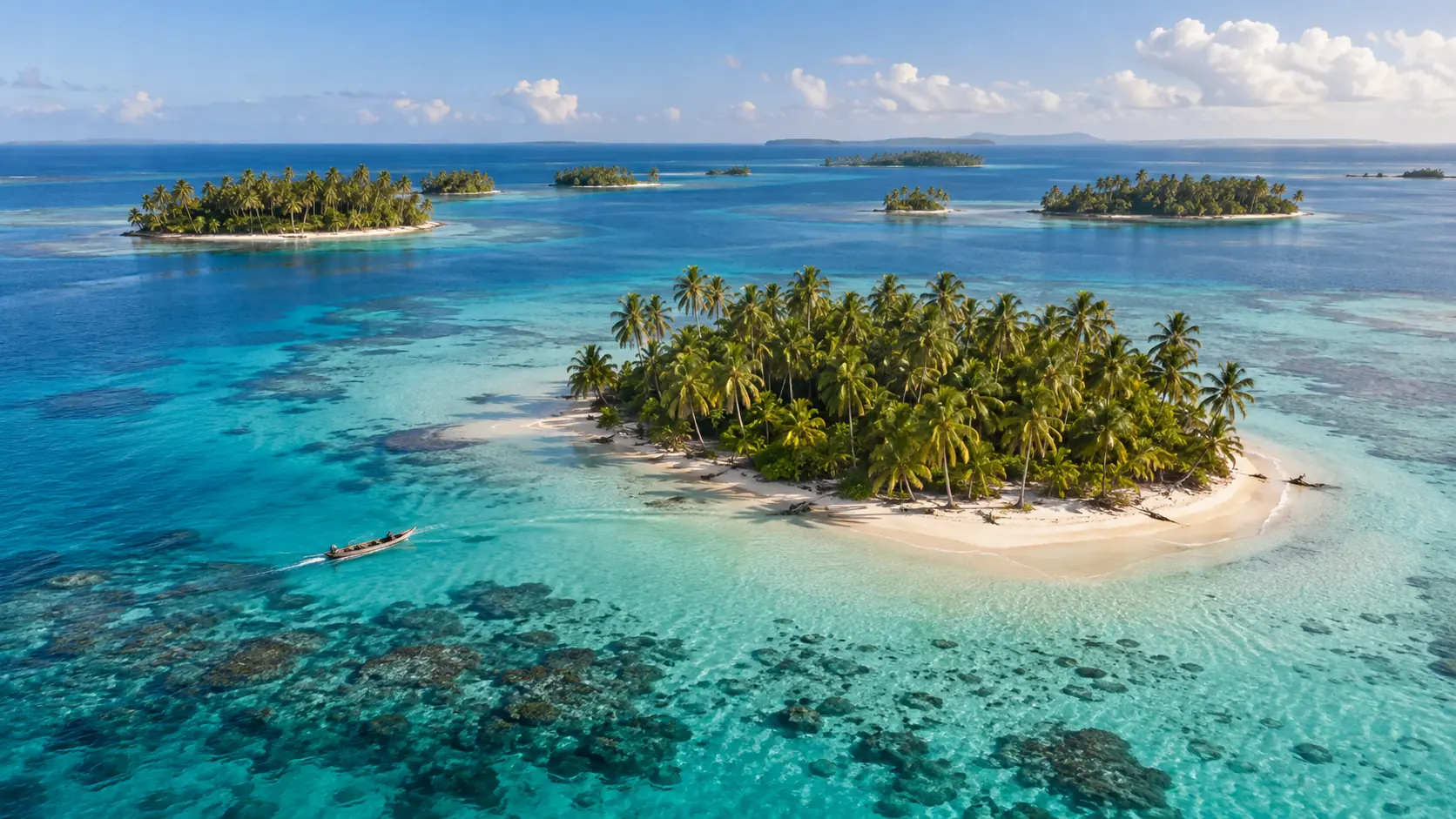
San Blas is the commonly used tourism name for the Caribbean archipelago within the Comarca Guna Yala, along Panama’s northeastern coast. The territory extends toward the Colombian border and contains hundreds of islands and coastal communities.
Some islands are inhabited, while others are used for fishing, agriculture, tourism or community activities. Accommodation and infrastructure vary considerably. Visitors may find everything from simple cabins and hammocks to more comfortable private rooms, but travelers should not expect the services of a conventional resort destination.
Guna Yala is governed through its own Indigenous institutions and community authorities. Tourism is an important part of the local economy, but it operates within a living territory rather than a theme park or privately controlled resort complex.
San Blas and Guna Yala: Understanding the Name
“San Blas Islands” remains the best-known international travel term. However, Guna Yala is the official and culturally appropriate name of the comarca and means “Guna land” or “land of the Guna.”
The spelling “Kuna” appears frequently in older books, tourism websites and historical documents. Travelers may therefore encounter San Blas, Kuna Yala and Guna Yala referring to the same general destination. In this guide, we use Guna when referring to the people, culture and territory while retaining San Blas Panama where it helps travelers recognize the destination.
A Brief History of the Guna People
The history of Guna Yala is essential to understanding the region. The Guna people maintained their identity through generations of political pressure, outside intervention and efforts to restrict their customs.
In February 1925, Guna communities organized an uprising commonly called the Guna Revolution or Tule Revolution. The conflict followed abuses and attempts to suppress Guna traditions. A subsequent peace agreement committed Panama to protecting Guna customs and became an important step toward the territory’s present system of autonomy.
The Comarca de San Blas was formally established in 1938. Its territorial limits and administration were later defined through Law 16 of 1953. Today, Guna Yala has a political and administrative organization that differs from Panama’s ordinary provinces and municipalities.
Visitors interested in Panama’s broader cultural diversity can also read our guide to the Indigenous peoples of Panama.
How to Get From Panama City to San Blas
Most visitors reach the western part of Guna Yala by traveling from Panama City to the Cartí area and continuing by locally operated boat. Transportation arrangements can change, so travelers should confirm the complete route directly with their accommodation or tour operator.
Travel by Road and Boat
The most common route combines an early-morning road transfer with a boat trip. The road crosses steep terrain before reaching the Caribbean side of Panama. A four-wheel-drive vehicle may be required or strongly recommended depending on current road and operator requirements.
At the designated port, visitors transfer to a locally operated boat for the trip to their island or community. Travel time on the water depends on the destination, weather and sea conditions.
Travel by Air
Air service to Guna Yala has existed at different times and for selected destinations, but routes and availability can change. Travelers should not assume that regularly scheduled flights operate to every community. Verify current options directly with the airline, lodge or authorized operator before planning around air transportation.
Book the Complete Transfer in Advance
A reliable reservation should clearly identify:
- Pickup time and location in Panama City
- Road transportation arrangements
- Port and boat transfers
- The island or community being visited
- Meals and beverages included
- Accommodation type, if staying overnight
- Community, port or visitor fees
- Cancellation and weather policies
Do not travel toward the comarca expecting to arrange every part of the trip after arrival. Availability may be limited, and access normally depends on coordination with local operators.
Entry Fees, Documents and Cash
Visitors may need to pay comarca entrance, port, island or community fees. The amount and method of collection can change, so request an itemized explanation from the operator before traveling.
Carry the identification requested by your operator, such as a passport or Panamanian identification document. Foreign visitors should also maintain evidence of their lawful immigration status in Panama.
Cash remains important in San Blas. ATMs, card terminals and reliable electronic payment services may not be available on the islands. Bring sufficient small-denomination cash for fees, beverages, crafts, additional activities and unexpected expenses. Keep it protected from water during boat transfers.
Things to Do in San Blas Panama
Relax on Caribbean Beaches
The region is known for small tropical islands, palm-lined beaches and clear water. A day trip may include one or several islands, while an overnight stay allows more time after daytime tour groups leave.
Snorkel Responsibly
Some islands offer snorkeling in shallow water near reefs, seagrass and marine habitats. Conditions differ by location and season. Follow the instructions of local boat operators and never stand on coral, remove marine life or touch starfish for photographs.
Visit a Guna Community
A community visit can provide meaningful insight into Guna history, governance, daily life and cultural traditions when organized with local consent. Experiences differ between communities, and visitors should follow the guidance of their hosts rather than treating homes or community spaces as unrestricted tourist attractions.
Learn About Mola Art
Molas are layered textile panels created through intricate cutting, stitching and appliqué techniques. They form an important part of Guna artistic expression and traditional clothing. Purchasing directly from Guna artisans supports local households and helps preserve this specialized art.
Ask before photographing an artist or individual mola design. Buying an authentic piece is more respectful than copying or reproducing a design without permission.
Try Locally Prepared Food
Meals often reflect available local ingredients and may include fish, seafood, rice, plantains, coconut or other simple preparations. Menus vary by island, season and operator. Travelers with allergies or dietary restrictions should communicate them before departure because alternative ingredients may be limited.
How to Visit Guna Yala Respectfully
Guna Yala is home to families and communities with their own laws, leadership and customs. Respectful behavior is therefore part of responsible travel.
- Ask before taking photographs. Obtain permission before photographing people, homes, ceremonies, community meetings or artwork.
- Follow local instructions. Access to certain islands, buildings or community spaces may be restricted.
- Dress appropriately in communities. Beachwear may be suitable on the beach but not necessarily in residential or communal areas.
- Support Guna-owned services. Use local guides, boats, accommodations and artisans whenever possible.
- Do not remove natural objects. Leave coral, shells, starfish and other marine life where they belong.
- Reduce waste. Bring reusable containers and take non-biodegradable waste back with you when instructed.
- Do not distribute gifts indiscriminately. Ask a community representative how assistance or donations should be handled.
Panama’s tourism authorities recognize community and Indigenous tourism experiences in Guna Yala. The territory also has a tourism strategy developed from an Indigenous territorial perspective, with sustainability and local governance as central priorities.
What Accommodation Is Like
Accommodation in San Blas is generally simpler than in Panama City or major resort areas. Depending on the island, travelers may find cabins with sand floors, shared bathrooms, limited electricity, fans instead of air conditioning and restricted fresh water.
Some properties offer private bathrooms, solar electricity and more comfortable rooms, but descriptions should be checked carefully. Before booking, ask about:
- Private or shared bathroom facilities
- Electricity and charging hours
- Mobile coverage or Wi-Fi
- Drinking water
- Mosquito nets or screens
- Meals included
- Boat transfers and luggage limits
The simpler setting is part of the experience, but travelers should understand exactly what their reservation includes.
What to Pack for San Blas
- Passport or identification requested by the operator
- Cash in small denominations
- Dry bag or waterproof protection for documents and electronics
- Reef-conscious sun protection and a hat
- Lightweight clothing and a modest cover-up for community visits
- Swimsuit, towel and sandals or water shoes
- Personal medication and basic first-aid supplies
- Insect repellent
- Reusable water bottle
- Portable charger
- Only the luggage permitted by the boat or air operator
When Is the Best Time to Visit San Blas?
Guna Yala can be visited throughout much of the year, but Caribbean weather does not follow an exact schedule. Rain, wind and changing sea conditions can affect road travel, boat departures, snorkeling and island access.
Instead of relying only on a seasonal description, confirm the forecast and operating conditions shortly before departure. Travelers who are sensitive to boat movement should also ask about expected sea conditions and the length of the transfer.
Safety and Practical Considerations
Choose an established operator that communicates clearly about transportation, boat safety, accommodations and emergency procedures. Wear the provided life jacket during marine transfers and protect valuables from spray and rain.
Medical services are limited on many islands. Travelers with important health conditions should carry their medication, discuss accessibility with the operator and consider whether a remote island trip is appropriate for them.
Mobile service and electricity may be unreliable. Share your itinerary with someone before departure and do not depend exclusively on your phone for payment, navigation or important records.
Day Trip or Overnight Stay?
A day trip is practical for travelers with limited time. It usually includes early transportation from Panama City, a boat transfer and visits to selected islands. However, a significant portion of the day may be spent traveling.
An overnight stay provides a slower experience and more opportunity to appreciate the environment and local hospitality. It also requires greater flexibility regarding electricity, bathrooms, meals and communications.
Neither option is automatically better. Choose based on available time, comfort expectations, weather and the type of cultural or natural experience offered by the host community.
Frequently Asked Questions About San Blas Panama
Is San Blas the same as Guna Yala?
San Blas is the older and widely recognized tourism name for the islands and coastal territory officially known as Guna Yala. Both names may appear in travel searches, but Guna Yala is the official name of the Indigenous comarca.
Can I visit San Blas without a tour?
Independent travel still requires coordinated road and boat transportation and compliance with comarca and community access requirements. For most visitors, arranging the complete journey through a Guna-operated accommodation or reputable operator is the simplest approach.
How far is San Blas from Panama City?
The total journey varies according to pickup location, road conditions, the departure port and the island being visited. Travelers should expect an early departure and several stages of transportation rather than a short direct drive.
Are there ATMs in the San Blas Islands?
Visitors should not rely on finding an ATM or accepting credit cards on the islands. Bring enough cash in small denominations for the trip and confirm which charges have already been included.
Can visitors photograph Guna people?
Only with permission. Some individuals or communities may decline photographs or request a fee. Always ask before photographing people, homes, cultural activities or artwork.
Is San Blas suitable for children?
Families can visit, but parents should consider long road and boat transfers, strong sun, limited medical services, simple accommodations and water safety. Confirm age requirements and appropriate life jackets with the operator.
Planning a Visit While Living in Panama
San Blas is one of many destinations that residents can explore after relocating to Panama. Its cultural importance also makes it a valuable introduction to the country’s Indigenous diversity and regional autonomy.
If you are considering a longer stay in the country, explore our guides to moving to Panama, the cost of living in Panama and available Panama residency options.
International Relocation Firm assists foreign individuals and families with immigration, residency and relocation matters. For advice about establishing legal residency or organizing your move, contact our Panama relocation team.
Originally published May 30, 2022. Updated September 2026.