Public transportation in Panama includes the Panama Metro, Metrobus services in Panama City and surrounding areas, and intercity and regional buses throughout the country. It can be an affordable way to commute or explore, but coverage, payment methods and schedules depend on where you travel. This guide explains Metro lines, fares, transport cards, airport connections and buses to the interior. For a broader look at living without your own vehicle, see our guide to transportation in Panama.
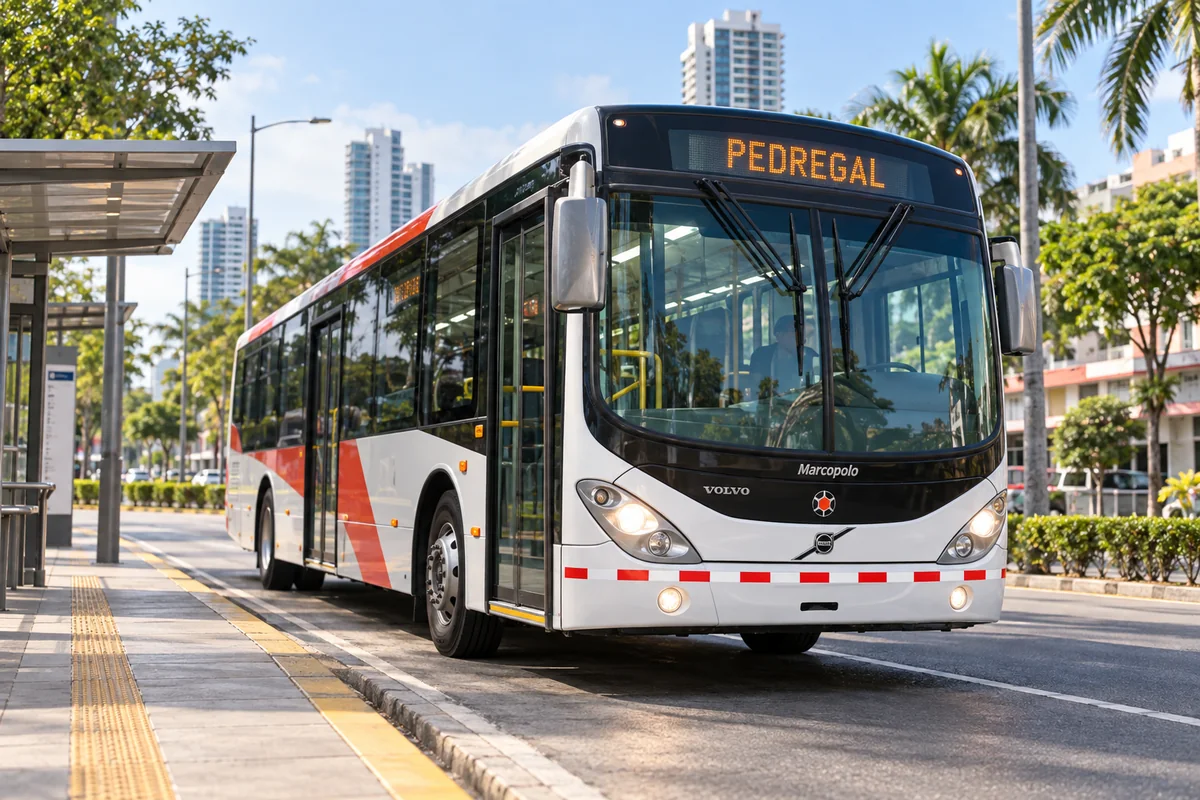
Public Transportation in Panama at a Glance
| Service | Regular adult fare | What to know |
|---|---|---|
| Panama Metro Line 1 | $0.35 | Connects Albrook and Villa Zaita. |
| Panama Metro Line 2 | $0.50 | Connects San Miguelito and Nuevo Tocumen, with an airport branch. |
| Metrobus trunk services | $0.25 | Use a transport card and check the route before boarding. |
| Metrobus corridor services | $0.75 | Confirm that your bus uses the required corridor route. |
| Intercity and regional buses | Varies by operator and route | Confirm the fare, departure point and return schedule directly. |
These are regular fares checked in October 2026. A journey involving multiple services may require more than one fare. Eligible passengers may qualify for special fares through the applicable personalized-card process.
The Panama Metro
The Panama Metro opened in 2014 and provides rail transport along important corridors in Panama City. It can help you avoid road congestion, although you may still need a bus, taxi or walk to reach your final destination.
Metro Lines and Coverage
- Line 1: Runs between Albrook and Villa Zaita, passing stations such as 5 de Mayo, Iglesia del Carmen, El Ingenio and San Miguelito. Villa Zaita opened in April 2024, extending the line beyond San Isidro.
- Line 2: Runs between San Miguelito and Nuevo Tocumen. Passengers can interchange with Line 1 at San Miguelito.
- Airport branch: Connects from Corredor Sur station on Line 2 through ITSE to Aeropuerto station, serving Tocumen Airport’s Terminal 2 area.
Check the current network map and service notices on the official Metro de Panamá website. Do not assume that a planned extension is already carrying passengers.
Cost and Logistics
The regular adult fare is $0.35 for Line 1 and $0.50 for Line 2. Using both lines normally costs $0.85. Follow the interchange signs at San Miguelito and validate your journey using the same card or payment credential at entry and exit.
You can use a reloadable transport card. The Metro also accepts supported contactless bank cards at the designated validators. Follow the instructions displayed at the station and keep your payment method available until you leave the system.
Metro Operating Hours
The Metro’s published regular operating hours are:
- Monday to Friday: 5:00 a.m. to 11:00 p.m.
- Saturday: 5:00 a.m. to 10:00 p.m.
- Sunday and public holidays: 7:00 a.m. to 10:00 p.m.
Maintenance, special events and service interruptions can change these hours. Check official notices before an early or late journey, and allow time to enter the station and complete any interchange.
Tips for Using the Panama Metro
- Check your destination: Identify the station, travel direction and any connection before entering.
- Prepare your payment: Keep your card accessible and check your transport-card balance.
- Allow extra time during busy periods: Platforms, trains and validators can be crowded.
- Plan the final part of the trip: Your destination may be some distance from the station exit.
Buses in Panama City
Panama City’s Metrobus system, operated by MiBus, complements the Metro by serving areas beyond the rail network. Bus travel is affected by traffic, and routes do not all have the same frequency or operating hours.
Metrobus Routes and Coverage
- Corredor Sur and Corredor Norte: Corridor services use these highways for selected journeys. Check the route’s destination and stops rather than assuming every corridor bus serves the same area.
- Albrook Terminal routes: Albrook is an important connection point for city buses, the Metro and intercity services.
- Neighborhood connections: Other routes link residential areas, employment centers and transport hubs.
Use the official MiBus website to consult route information and operational changes. Confirm both your outbound and return journeys.
Cost and Logistics
MiBus publishes regular fares of $0.25 for trunk services and $0.75 for corridor services. Its user guide also lists a $0.50 charge for a qualifying transfer from a trunk service to a corridor service.
Passengers use a transport card to validate their fare when boarding or entering a paid zone. Do not assume that the Metro’s contactless bank-card option is available on every bus. Consult the MiBus user guide for payment instructions, transfer conditions and passenger rules.
Tips for Using the Metrobus
- Confirm the route: Check the bus’s destination and the correct side of the road for your stop.
- Prepare for traffic: Allow a buffer for appointments, connections and airport journeys.
- Keep your card loaded: Check your balance before boarding.
- Check the last service: A route that works well during the day may have fewer departures later.
Getting to Tocumen Airport by Metro
The airport branch connects with Line 2 at Corredor Sur. From Line 1, interchange at San Miguelito, travel on Line 2 to Corredor Sur, then follow the signs for the airport branch.
Aeropuerto station serves the Terminal 2 area. Check which terminal your airline uses and allow time for walking, terminal transfers, luggage and airport procedures. The Metro does not provide a direct connection from every neighborhood.
Consult the official airport-branch guide before traveling. For flights outside operating hours, arrange another transport option.
Buses in the Country’s Interior
Outside the metropolitan area, public transportation in Panama relies mainly on intercity buses and local services. Frequency, comfort, payment arrangements and luggage capacity vary by route and operator.
Intercity and Long-Distance Buses
Albrook Bus Terminal is a major departure point for travel from Panama City to destinations such as David, Santiago and Chitré. Confirm the operator, ticket counter, departure time, destination terminal and luggage policy before buying a ticket.
Some routes use air-conditioned coaches, while others use smaller vehicles. Ask about stops, seating and available facilities rather than assuming every long-distance service offers the same experience.
For Bocas del Toro, distinguish between mainland destinations and the islands. An island journey requires an additional boat connection; the bus does not take you directly to an island hotel.
Regional and Local Buses
Smaller buses and minibuses, sometimes called colectivos or chivas, connect towns and nearby communities. Ask where to board, how payment works and when the final return service leaves. These services may have limited luggage space or less frequent departures.
Tips for Using Buses in the Interior
- Check ticket arrangements: Ask whether advance purchase is available, particularly for holidays and busy weekends.
- Confirm the full journey: Include any local bus, taxi or boat connection after arrival.
- Carry small cash denominations: Do not assume every operator accepts a bank card or online payment.
- Prepare for the trip: Bring water and keep documents, medication and valuables accessible.
Costs and Logistics of Public Transportation in Panama
Your transport budget depends on the entire journey, not just the first fare. Include transfers, trips to the station, travel frequency and occasional alternatives when services do not match your schedule.
Payment Methods and Reloading
A reloadable transport card is useful for combining Metro and Metrobus journeys. Check current purchase and reload options rather than assuming every machine accepts the same payment method.
In September 2026, Metro announced updates to its payment and balance-management system, including station reloads and digital channels. Its announcement describes the A2-20 application for balance checks, locating service points and reloads through Yappy. Check the official payment-system update for details.
Intercity and regional operators have their own payment arrangements. Confirm fares directly instead of relying on one national price range.
Choosing Where to Live
If you plan to rely on public transport, test the journey from a prospective home to work, shops and healthcare before signing a lease. Consider walking conditions, rain, transfers and evening service—not only the distance to the nearest stop.
Include commuting expenses in your cost of living in Panama budget.
Frequently Asked Questions About Public Transportation in Panama
How much does the Panama Metro cost?
Regular adult fares are $0.35 on Line 1 and $0.50 on Line 2. A journey using both lines normally costs $0.85. Special fares require the applicable eligibility and personalized-card arrangements.
Can tourists use public transportation in Panama?
Yes. Visitors can use the Metro and buses. Prepare the appropriate payment method, check the route and allow time for connections.
Can I pay for the Metro with a bank card?
The Metro accepts supported contactless bank cards at designated validators. Use the same payment credential at entry and exit. MiBus separately instructs passengers to use a transport card for its buses.
Does the Metro go to Tocumen Airport?
Yes. The airport branch connects from Corredor Sur station on Line 2 to Aeropuerto station in the Terminal 2 area. Check your airline’s terminal and allow time for any additional transfer.
Do buses run all night in Panama?
Do not assume that they do. Hours vary by route and operator. Check the final departure and arrange an alternative if your journey falls outside available service.
Can you live in Panama without a car?
It can be practical in locations with suitable transport connections and nearby services. In rural areas or places with infrequent buses, a vehicle may be more useful. Evaluate your actual daily journeys before deciding.
Planning Your Move to Panama?
Understanding transport options can help you choose a neighborhood and plan your household budget. Explore our Panama relocation guide for broader moving considerations.
For assistance with relocation and immigration planning, contact us here. For live transport schedules, route changes or fare-card support, contact the relevant transport operator directly.
Originally published August 14, 2024. Updated October 2026. Fares, routes, payment options and operating hours can change; check official operator information before traveling.