Panama City offers a wide range of expat-friendly neighborhoods with modern housing, international schools, imported groceries, and healthcare access, making it one of the most livable cities in Latin America for expats.
Panama City Expat Neighborhoods – Quick Highlights
- Panama City is home to the largest and most diverse expat communities in Panama, offering neighborhoods that suit retirees, families, and working professionals alike.
- Most expats live in areas such as San Francisco, El Cangrejo, Costa del Este, Punta Pacifica, and Clayton due to convenience, safety, and access to services.
- Typical rent for a 2-bedroom condo in a newer building ranges from $1,200 to $2,800/month, depending on the neighborhood and amenities.
- Purchase prices for 2–3 bedroom condos generally range from $180,000 to $600,000+, with waterfront and luxury areas commanding higher prices.
- Each neighborhood offers a distinct lifestyle—from walkable historic districts to modern family-oriented communities with international schools.
- Visiting Panama City before choosing a neighborhood is strongly recommended to understand traffic patterns, building quality, and day-to-day lifestyle.
While this guide focuses specifically on Panama City, many expats also compare options across the country before moving to Panama. For a broader look at lifestyle and location differences nationwide, see our guide to the best places to live in Panama.
1. Casco Viejo
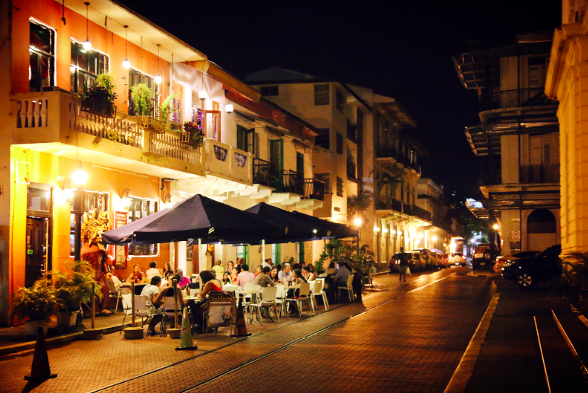
Panama City’s Casco Viejo neighborhood is by far one of the most recognizable areas for expats. It is the city’s top tourist destination, a UNESCO World Heritage Site, and a hub for historic architecture, boutique hotels, and cultural events.
Casco has undergone a major renaissance over the past decade, with restored colonial buildings, luxury condos, and some of the city’s most sought-after restaurants and nightlife. Many expats living here value walkability, architecture, and social energy.
Typical housing costs (newer or fully renovated buildings):
- 2-bedroom condo rent: $1,800–$2,500/month
- 2–3 bedroom purchase price: $350,000–$600,000+
Why expats choose Casco Viejo:
- Strong expat social scene and cultural life
- Walkable access to dining, bars, and events
- Historic charm combined with modern interiors
- Popular with younger professionals, creatives, and part-time residents
Casco is not for everyone. Prices are high by local standards, parking is limited, and nightlife can be noisy. Still, for expats seeking character and energy, it remains one of Panama City’s most desirable addresses.
2. San Francisco
San Francisco is one of Panama City’s most balanced and livable neighborhoods for expats. Centrally located, it offers a wide range of housing options, from older mid-rise buildings to modern condo towers with amenities.
The neighborhood has grown significantly as prices in Punta Pacifica and Costa del Este have increased, making San Francisco a popular choice for expats who want space, convenience, and relative value.
Typical housing costs (newer buildings):
- 2-bedroom condo rent: $1,500–$2,100/month
- 2–3 bedroom purchase price: $250,000–$400,000
Why expats choose San Francisco:
- Large supermarkets with imported goods
- Growing restaurant and café scene
- Central location with manageable commutes
San Francisco attracts a mix of working professionals, couples, and families, and offers a strong sense of everyday livability without the premium pricing of waterfront districts.
3. Punta Pacifica
Punta Pacifica is one of Panama City’s most modern and upscale neighborhoods. Known for its luxury high-rises and ocean views, it is especially popular with expats who prioritize convenience, security, and proximity to private healthcare.
The area is home to Punta Pacifica Hospital (affiliated with Johns Hopkins Medicine International), a major draw for retirees and long-term residents.
Typical housing costs (newer luxury towers):
- 2-bedroom condo rent: $2,200–$3,000/month
- 2–3 bedroom purchase price: $400,000–$700,000
Why expats choose Punta Pacifica:
- 24-hour supermarkets and private clinics
- Easy access to Corredor Sur and the airport
- Marina access and ocean views
- High security and building amenities
This area is best suited for retirees, executives, and expats with higher budgets who want a turnkey lifestyle close to medical care and business districts.
4. El Cangrejo
El Cangrejo has long been one of Panama City’s most established expat neighborhoods. Centrally located and walkable, it offers excellent value and a strong community feel. It’s also one of the city’s most language-friendly areas for newcomers, with many English-speaking service providers and Spanish schools.
Typical housing costs (updated buildings):
- 2-bedroom condo rent: $1,200–$1,700/month
- 2–3 bedroom purchase price: $180,000–$300,000
Why expats choose El Cangrejo:
- Moderate pricing relative to location
- Cafés, bookstores, and neighborhood bars
- Spanish schools and bilingual services
- Strong expat community presence
El Cangrejo is popular with retirees, teachers, digital nomads, and long-term residents looking for affordability without sacrificing city access.
5. Clayton (Former Canal Zone)
Located in the former U.S. Canal Zone, Clayton offers a suburban, green environment unlike most of Panama City. Its wide streets, low-rise buildings, and proximity to nature make it ideal for families. The nearby City of Knowledge business and education hub attracts NGOs, tech companies, and international organizations.
Typical housing costs:
- 2-bedroom condo or townhouse rent: $1,400–$2,000/month
- 2–3 bedroom purchase price: $280,000–$450,000
Why expats choose Clayton:
- International schools nearby
- Quiet, green environment
- Strong North American infrastructure legacy
- Family-oriented lifestyle
Clayton appeals primarily to families and professionals who prefer space and calm over nightlife.
6. Costa del Este
Costa del Este is one of Panama City’s most planned and modern neighborhoods. Built largely within the past 20 years, it offers wide boulevards, parks, and high-end residential towers. It’s especially popular with expat families due to the concentration of international schools, supermarkets, and modern medical facilities.
Typical housing costs (newer buildings):
- 2-bedroom condo rent: $2,000–$2,800/month
- 2–3 bedroom purchase price: $350,000–$600,000
Why expats choose Costa del Este:
- Top international schools
- Modern infrastructure and green spaces
- Corporate offices and dining options
- Clean, organized urban design
Commute traffic into the city center can be heavy during peak hours, but many residents work locally or remotely.
7. Obarrio
Obarrio sits at the heart of Panama City’s financial district. While less residential in feel, it attracts expats who work in banking, law, and multinational companies.
Typical housing costs:
- 2-bedroom condo rent: $1,600–$2,300/month
- 2–3 bedroom purchase price: $300,000–$500,000
Why expats choose Obarrio:
- Walkable to offices and restaurants
- Central location
- Newer high-rise condos
- Ideal for business professionals
8. Punta Paitilla
Often confused with Punta Pacifica, Punta Paitilla is a more established, residential neighborhood with a quieter atmosphere and long-term residents.
Typical housing costs:
- 2-bedroom condo rent: $1,700–$2,400/month
- 2–3 bedroom purchase price: $280,000–$450,000
Popular with retirees and families, Punta Paitilla offers ocean breezes, hospitals, and traditional supermarkets.
9. Avenida Balboa
Running along the Cinta Costera, Avenida Balboa offers some of the city’s most iconic skyline and ocean views.
Typical housing costs:
- 2-bedroom condo rent: $1,900–$2,700/month
- 2–3 bedroom purchase price: $350,000–$650,000
This area appeals to expats who value views, walking paths, and proximity to downtown, though traffic noise can be a factor.
10. Albrook & Cerro Ancón
Albrook and Cerro Ancón offer a more residential, green alternative near the Canal Zone. These areas are popular with families and long-term expats seeking tranquility.
Typical housing costs:
- 2-bedroom rent: $1,300–$1,900/month
- Purchase prices: $220,000–$400,000
Panama City Neighborhood Comparison for Expats
For a deeper breakdown of monthly expenses beyond rent or purchase prices, including utilities, groceries, transportation, and healthcare, see our full guide to the cost of living in Panama and review the comparison table below.
| Neighborhood | Best For | 2BR Rent (Newer Building)* | 2–3BR Purchase (Condo/Home)* | Walkability & Lifestyle | Expat Conveniences (groceries, dining, services) | Traffic / Access Notes | Schools (where relevant) |
|---|---|---|---|---|---|---|---|
| Casco Viejo | Professionals, creatives, part-time residents | $1,800–$2,500/mo | $350k–$600k+ | Very walkable; historic + nightlife | High-end dining, cafés, cultural events; boutique shopping | Limited parking; nightlife noise; easy access to Cinta Costera | Not a primary “school hub” |
| San Francisco | Balanced lifestyle; couples, families, professionals | $1,500–$2,100/mo | $250k–$400k | Mixed walkability; residential + restaurant zones | Strong supermarket access; growing dining scene; ATLAPA nearby | Central; traffic varies by corridor/time of day | Some private/bilingual options nearby |
| Punta Pacifica | Executives, higher-budget expats, retirees | $2,200–$3,000/mo | $400k–$700k | High-rise luxury; less street-level walkability | 24-hour supermarket; business towers; private healthcare nearby | Fast access to Corredor Sur/airport; peak-hour congestion | Private schools reachable; not the densest school zone |
| El Cangrejo | Value-seekers, retirees, long-term residents | $1,200–$1,700/mo | $180k–$300k | Walkable; neighborhood cafés/bars; community feel | Spanish schools; bilingual services; everyday dining and shops | Central; easy access to Via España & Metro areas | Good for older kids/teens needing central access |
| Clayton (Canal Zone) | Families, NGO/tech professionals, nature lovers | $1,400–$2,000/mo | $280k–$450k | Suburban + green; quieter, low-rise feel | Close to City of Knowledge; family services; calmer shopping runs | Not downtown; commutes depend on work location | Strong international school proximity |
| Costa del Este | Families, corporate professionals, “planned-city” lifestyle | $2,000–$2,800/mo | $350k–$600k | Modern towers; parks; more car-oriented than Casco/Cangrejo | Imported goods easier to find; modern malls/restaurants/services | Commute traffic can be heavy to city center at peak times | Top international schools concentration |
| Obarrio | Business professionals, bankers, consultants | $1,600–$2,300/mo | $300k–$500k | Urban, central, work-focused | Walkable to offices + restaurants; strong service density | Very central; traffic peaks around business hours | Some private options nearby |
| Punta Paitilla | Retirees, families, long-term residents | $1,700–$2,400/mo | $280k–$450k | More residential; calmer than Punta Pacifica | Hospitals nearby; supermarkets; traditional neighborhood services | Good access to central corridors; traffic depends on route | Private schools within reasonable driving distance |
| Avenida Balboa | View-seekers, runners/walkers, downtown proximity | $1,900–$2,700/mo | $350k–$650k | Waterfront promenade (Cinta Costera); high-rise living | Dining and services nearby; easy access to downtown | Traffic/noise can be a factor; excellent access to major arteries | Not a school-centric zone |
| Albrook & Cerro Ancón | Families, long-term expats, green/quiet lifestyle | $1,300–$1,900/mo | $220k–$400k | Residential, green, calmer pace; nature adjacent | Near Albrook Mall; easy shopping; access to Canal Zone services | Access to core city is good, but depends on bridge/corridor timing | Good proximity to schools in Canal Zone areas |
*Pricing is provided as typical market ranges for newer buildings (generally built within the last 15–20 years, with elevator, private parking, security, and amenities such as gym/pool). Actual prices vary by exact location, building, views, floor level, furnishings, and current market conditions.
Before signing a lease or purchasing property, expats should also understand their legal status and long-term options. Panama offers several residency visa options depending on nationality, income, retirement status, or investment plans.
FAQs: Living in Panama City as an Expat
Where do most expats live in Panama City?
Most expats live in neighborhoods like San Francisco, El Cangrejo, Costa del Este, Punta Pacifica, and Clayton due to convenience, safety, and access to services.
What is the best neighborhood for expat families?
Costa del Este and Clayton are particularly popular with families because of international schools, green spaces, and modern housing.
Is Panama City expensive for expats?
Compared to many North American cities, Panama City offers good value, though premium neighborhoods can be costly. Lifestyle choices play a major role.
Should I rent before buying in Panama?
Yes. Renting first allows expats to experience traffic patterns, neighborhood culture, and building quality before committing long-term. This is especially important when planning a permanent move to Panama.